Cyber harassment on WhatsApp: what does Kenyan law actually say?
Cyber harassment WhatsApp Kenya cases usually start the same way — threats, rumours, or humiliation dropped into a group chat, and a victim who assumes there’s nothing formal they can do beyond leaving the group. There is. This article sets out what the law says, what just changed, and exactly what to do about it.
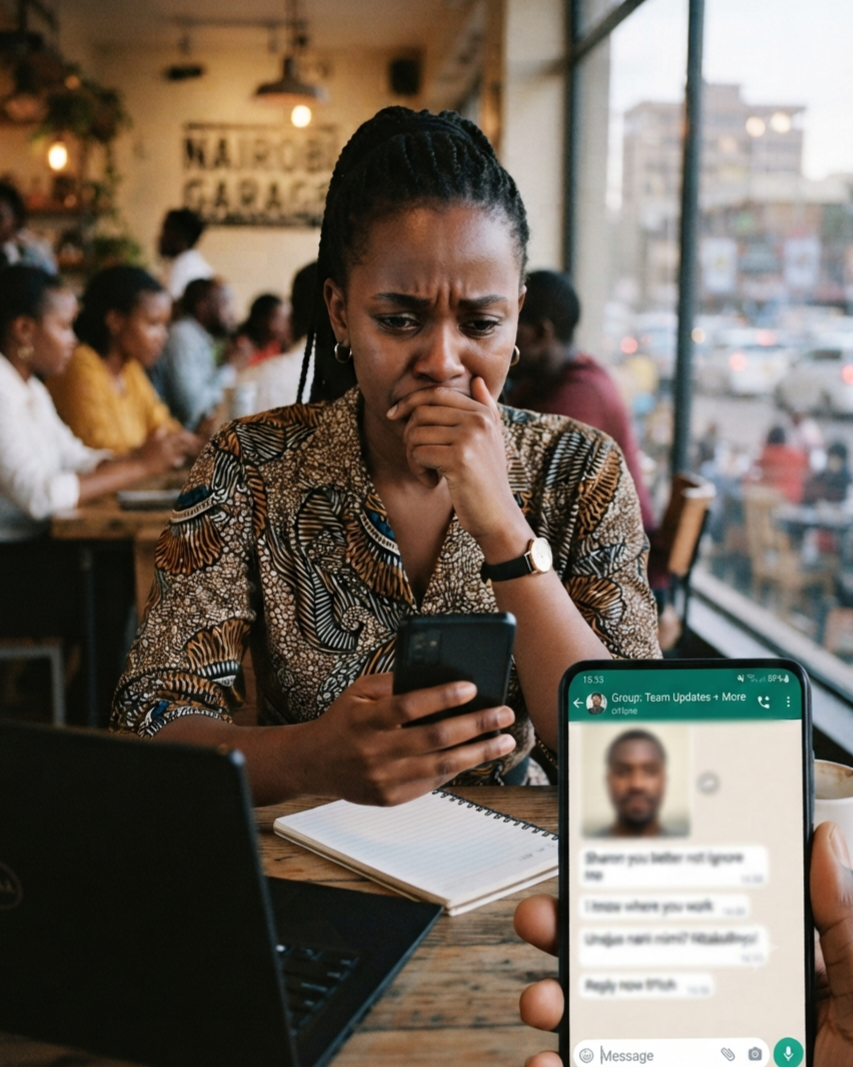
Cyber Harassment WhatsApp Kenya: The Legal Basis
The Computer Misuse and Cybercrimes Act, 2018 makes it an offence, under Section 27, to knowingly send someone a message that causes them fear, is indecent or grossly offensive, or detrimentally affects them. This covers WhatsApp, SMS, email, and social media — the medium doesn’t matter, the conduct does. This isn’t a fringe or untested provision either: when the Bloggers Association of Kenya challenged the constitutionality of the entire Act, the High Court specifically considered and upheld Section 27, finding the offence necessary and proportionate, as documented in Strathmore CIPIT’s digest of that judgment.
That track record matters, because a related but separate provision has just been through a rougher ride in court — and it’s worth understanding the difference before you act.
Legal update: in 2025, Parliament amended Section 27 to widen its scope and sharply raise penalties, up to a KSh 20 million fine or 10 years’ imprisonment. Digital rights groups and the Kenya Human Rights Commission challenged the amendment, and in October 2025 the High Court suspended parts of it pending a full hearing, as reported by Capital Business. In July 2026, the High Court ruled on the merits: it struck down the specific clause criminalising communication “likely” to drive someone to suicide as unconstitutionally vague, while the rest of the amended framework stood. Further appeals are expected, so the exact scope and penalties remain in motion. What hasn’t changed is the core 2018 offence — it’s still there, it’s already been tested in court, and it still applies to ordinary WhatsApp harassment.
A precedent worth knowing: Andare v Attorney General
Kenyan courts have a track record of striking down vaguely worded speech offences before this year’s ruling. In Geoffrey Andare v Attorney General & 2 Others [2016] eKLR, the High Court declared a similarly worded provision in the Kenya Information and Communications Act — criminalising “grossly offensive” phone messages — unconstitutional for vagueness. That earlier case is part of why Section 27’s wording has faced repeated scrutiny, and why the 2026 ruling wasn’t a total surprise to those following the law closely.
What To Actually Do If It Happens to You
Every cyber harassment WhatsApp Kenya complaint we see starts with the same instinct — delete the evidence. Don’t. Here’s what to do instead.
-
01
Preserve the evidence first
Screenshot every message with the timestamp and sender’s number or name visible. Deleted evidence is much harder to recover and can weaken a case.
-
02
Report to the DCI Cybercrime Unit
Or your nearest police station. You can also file a report through the police’s online reporting channels if attending in person isn’t practical.
-
03
Consider whether a civil claim fits better
If the harm is reputational, the Defamation Act may apply instead of or alongside a criminal complaint. If the harasser is a partner or family member, the Protection Against Domestic Violence Act may offer a faster route to a protection order.
-
04
Use the platform’s own tools immediately
Blocking, reporting, and leaving the group won’t resolve the legal matter, but it stops the immediate exposure while you pursue the rest.
-
05
Get an advocate involved early
Especially if the harassment is ongoing, involves threats, or is affecting your business or employment. A demand letter alone sometimes resolves things without needing to escalate further.

When It’s a Workplace Problem, Not Just a Personal One
For SMEs, cyber harassment WhatsApp Kenya cases often show up inside a company group chat — a manager berating staff, or colleagues turning on one employee. That’s not only a potential Section 27 matter; it can also trigger an employer’s obligations under the Employment Act to maintain a harassment-free workplace. Businesses that don’t have a clear policy on conduct in work-related group chats are exposed on two fronts at once: to a cybercrime complaint against the individual, and to an employment claim against the company for failing to act. A short, clear digital conduct policy is a cheap way to close both gaps before they become a problem.
A note on legal advice: this article explains the general legal framework and a fast-moving area of ongoing litigation. It is not a substitute for advice on your specific situation, and it isn’t a guarantee of any particular outcome. If you’re dealing with active harassment, speak to an advocate about the facts of your case before deciding how to proceed.
Frequently Asked Questions
Is sending abusive WhatsApp messages a crime in Kenya?
It can be, under Section 27 of the Computer Misuse and Cybercrimes Act, 2018, which criminalises knowingly sending a message that causes fear, is indecent or grossly offensive, or detrimentally affects the recipient. This core offence has already survived a constitutional challenge, so it remains a usable legal tool.
Has cyber-harassment law in Kenya changed recently?
Yes. A 2025 amendment expanded the offence and raised penalties, but the High Court struck down part of that amendment in July 2026 for being too vague, while upholding the original 2018 offence. The law in this area is actively being litigated, so specifics can shift.
What should I do first if I’m being harassed on WhatsApp?
Preserve the evidence before you do anything else — screenshot the messages with visible timestamps and sender details, and don’t delete the chat. Then report to the DCI Cybercrime Unit or your nearest police station, and speak to an advocate about whether a civil claim also applies.
Can I take civil action instead of reporting a crime?
Yes. Depending on the facts, the Defamation Act, the Protection Against Domestic Violence Act, or a civil claim for damages may apply alongside or instead of a criminal complaint. An advocate can help you choose the route that actually fits your situation.
Cyber harassment WhatsApp Kenya law keeps changing, but the core protection has held since 2018. Whatever happens on appeal to the 2025 amendment, the original Section 27 offence remains the reliable, tested foundation for a genuine complaint — which is exactly why it’s worth getting advice specific to your situation rather than relying on last year’s headlines.
The information in this article is provided for general informational purposes only and does not constitute legal advice. Laws, regulations, and court rulings referenced above may change, and the application of the law to any specific situation will depend on the individual facts and circumstances of that matter. If you are experiencing online harassment, you should consult a qualified advocate before taking action.
Dealing with online harassment?
We advise individuals and businesses across Thika and Kiambu County on cyber-harassment complaints and workplace digital conduct policies.
Leave a Reply