

How to fill in SCC 1 form: the small claims Statement of Claim, part by part
SCC 1 is the form that starts a small claim. Here is what each box asks for, what to write and what to leave blank.

Here is how to fill in SCC 1 form, the Statement of Claim used to start a case in the Small Claims Court. The form looks short, but each box asks for something specific, and a vague or wrong entry can slow your case down before it starts.
Under the Small Claims Court Act, 2016, a claim begins with a statement of claim in the prescribed form (section 23). This guide takes the form one part at a time, in the order you will meet it. You can get the form from our small claims forms download page, and the wider process is in our small claims court Kenya guide. This is general information as at October 2026.
The form at a glance
How to fill in SCC 1 form, part 1: your details as claimant
Start at the top. The court station, claim number and year are for the registry, so leave the claim number blank unless the registry gives you one. Write your name as A.B. on the form, using your full legal name exactly as it appears on your ID, or the full business name if the business is the claimant.
Then complete your postal address, physical address, telephone number and email. Use a number and email you check, because the court uses them to reach you. The nature of business box is for what you do, such as “electronics retail” or “building contractor”. The location, sub-location or village line helps the court place you, so fill it even if it feels obvious.
In person or as a representative. Tick one box. Section 20 expects a party to appear in person, and allows an authorised representative where you can’t. The court has to be satisfied that a non-lawyer representative knows the case and has the authority to bind you. If you tick representative, give the person’s details in the second block and write why you are claiming for them. Attach the written authority, such as a letter or resolution.
Part 2: the respondent’s details
The respondent is the person or business you are claiming from. Use the full name exactly as it appears on the contract, invoice, receipt or ID. A claim brought against the wrong name causes delays you can avoid. If you only know a trading name, ask the supplier or check the invoice for the registered name.

Add their postal and physical address, phone and email as far as you know them. The physical address matters most, because the claim has to reach them. The legal status boxes are individual, sole proprietorship, partnership, company, cooperative and State department. Tick the one that fits, since it affects who is named on the claim. If there is more than one respondent, the form allows you to write the extra details on the back of the page.
Part 3: the nature of your claim
This part has five tick-boxes: goods sold and delivered, services rendered, money had and received, loss or damage to property, and personal injury. Tick the one that matches your dispute and fill in the date and amount. These types follow section 12, which lists what the court can hear.
Give the date as the day the goods were delivered, the service was done, the money was paid or the damage happened, and put the amount in shillings in figures. Personal injury asks for a date only, because compensation is decided by the court.
Knowing how to fill in SCC 1 form correctly at this stage matters because the respondent reads the same boxes to understand what you are claiming. One rule to keep in mind: you can’t split one claim into several smaller ones to fit under the limit (section 14). If your claim is above KSh 1,000,000, you still file one claim and waive the excess, as Part 5 explains.
How to fill in SCC 1 form, part 4: explain what happened
This is the box people find hardest. The form asks you to explain briefly the circumstances of the claim and attach supporting documents. Section 24 asks for particulars that tell the other side the grounds of the claim and how each amount was worked out. Keep it plain and in the order it happened.
- The agreement.
Who agreed what, when, and how: a written contract, a quotation, a message or a verbal arrangement.
- What you did.
The goods you delivered or the work you finished, with dates and invoice numbers.
- What went wrong.
The amount unpaid, the damage or the missed obligation, and the sums involved, with simple arithmetic where there is any.
- What you did about it.
Reminders, calls, messages or a demand letter, with dates.
- Your documents.
List what you attach, such as the invoice, delivery note, M-Pesa statement and messages, and number them so the account can point to them.
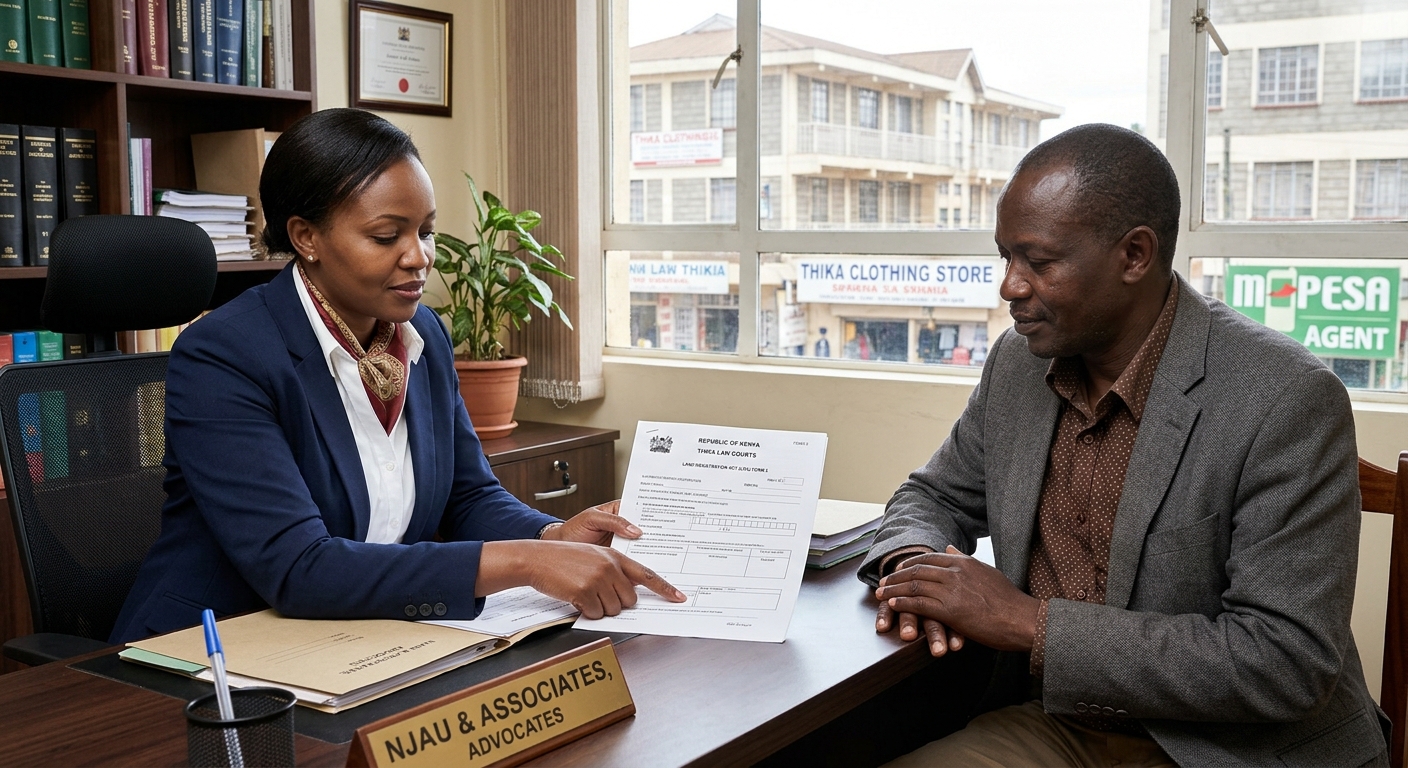
Avoid long arguments or opinions about the other side. Facts, dates and figures do the work here. If the account does not fit in the space, you can continue on a separate sheet, marked clearly as a continuation of part 4 and signed, and mention it on the form. Ask the registry how it prefers extra pages to be attached.
Part 5: the relief you ask for
This is what you want the court to order. The boxes are judgment in a sum of money, compensation to be determined by the court, costs of the claim to be assessed by the court, and other relief you can briefly explain. Most money claims tick judgment for a sum and costs, and put in the exact amount from Part 3.
Just below sits a statement that by filing you waive and forfeit recovery of all sums above KSh 1,000,000, excluding costs and interest. Read it before you sign. It means that if your debt is bigger than the limit, you give up the extra amount to bring the claim in this court.
Sign and date it
Write your name and sign where the form asks, then read the declaration that the information is true and date it. Sign only what you have checked yourself. If a representative is filing, the representative signs for you as the form directs.
Before you file, check every name, date and amount against your documents.
Leave these boxes alone
The acknowledgement of service is for the respondent to complete when they receive the claim. The “for official use only” box, with the filing date and the registrar’s signature, is completed by the court.
Leave both blank when you file your copy. Once you know how to fill in SCC 1 form this way, keep a complete copy for your own records, with the attachments, before you hand the original in.
Get the form
SCC 1 and the response form, SCC 2, are together in one six-page file. Use the Word version to type, or the PDF to print and fill in by hand.
Pages 1 to 3 are SCC 1. If the court asks you to use its own current form, use that. For what comes next, see our guide to judgment debtor arrest in Kenya on enforcing a judgment.
The information in this article is provided for general informational purposes only and does not constitute legal advice. Court forms, fees and practice change, and the application of the law depends on the facts of each case. If you are considering a claim, please consult a qualified advocate.
Frequently asked questions
Do I need an advocate to fill in SCC 1?
No. The form is designed so that a claimant can complete it. You may choose to have an advocate help, and the Act provides for advocates’ fees.
What if my claim is more than KSh 1,000,000?
The form includes a statement that you waive recovery of sums above KSh 1,000,000, excluding costs and interest. You can’t split the claim into smaller ones to fit under the limit.
Can I attach documents to SCC 1?
Yes, and you should. The form asks you to attach documents that support the claim, such as invoices, delivery notes, messages and payment records.
Which boxes do I leave blank on SCC 1?
The acknowledgement of service, which the respondent completes, and the for official use only box, which the court completes.
Preparing a money claim?
Contact Waweru Nyambura & Company Advocates, Thika Arcade, Thika.
Leave a Reply